


2026 Q4 Market Outlook: The Vigilantes Versus The House
Thu, 10/22/2026 - 08:00 Wealth management

Chief Investment Officer
(502) 259-2543
John.Fidler@syb.com
3Q26 Review
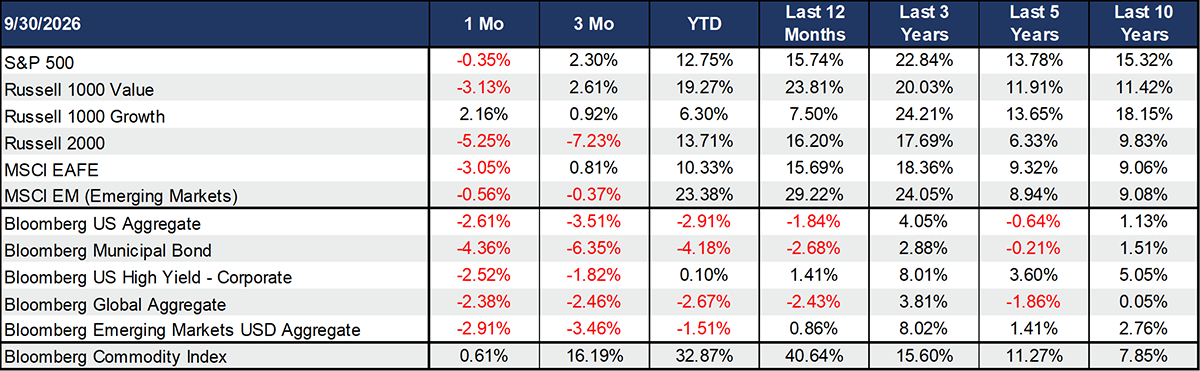
Our view that mid-summer weakness in equity markets would prove short-lived, as opposed to the beginning of a bear market, was correct as the S&P 500 rallied a bit over +2% during the quarter. For all the fear over AI stocks in July (when they sold off sharply due to a major hedge fund liquidation), earnings remain strong, datacenter investment to power the AI boom is getting funded, and the Summer sell-off proved to be a buying opportunity for large cap US stocks.
However, small caps fell over 5%, weighed on by higher interest rates (more on this later). International equity markets also lagged, with Developed Markets down 2% and Emerging Markets treading water.
Commodities were modestly higher amidst extreme volatility fueled by geopolitics pushing oil prices higher overall, with the big sell-offs occurring in August and September. Gold rose sharply early in the quarter, only to give back nearly all those gains as interest rates rose. Liquid alternatives again proved a solid diversifier, with our preferred strategies gaining around 10% on the quarter.
Bonds did poorly and proved to be a problem for some other asset classes, as mentioned. The Barclays Agg fell 2% and 10-year and 30-year Treasury yields hit the highest levels in over 20 years.
4Q26 Outlook
Longtime readers will recall we approach our macro framework by looking at the core drivers fundamental to basic economics: government spending, consumer spending, and corporate investment.
Government spending was a tailwind to the economy in 1H26 and into 3Q, as the OBBB drove increased corporate investment (due to the return of bonus depreciation) and more money in consumers’ pockets due to larger tax refunds. However, the incremental impact of that stimulus has largely abated and is now a year-on-year headwind. While the US continues to run historically large deficits for an economic expansion, their incremental contribution to growth is waning modestly.
Fiscal Contribution to Real GDP Growth
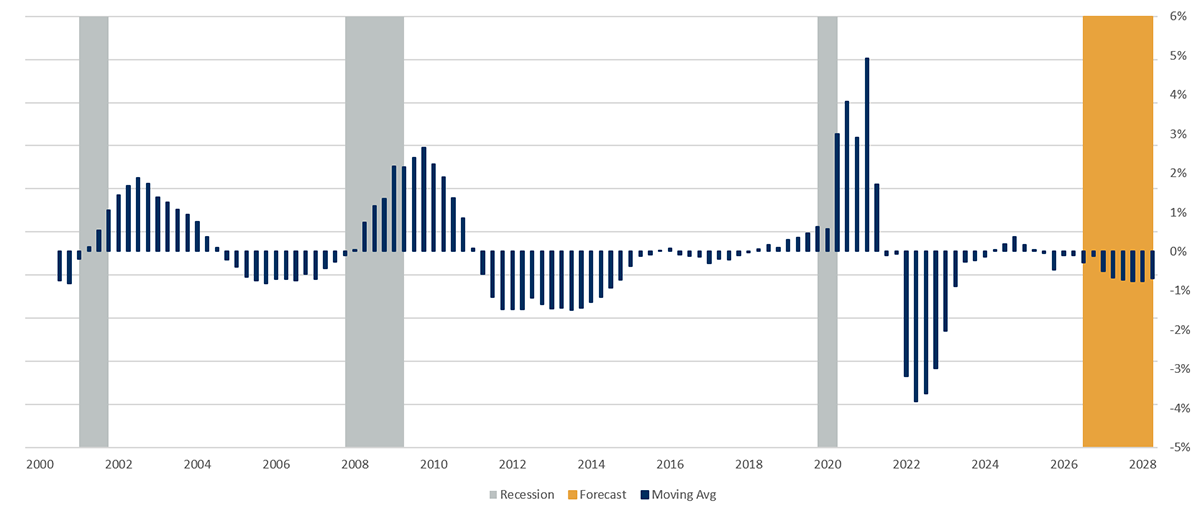
Despite the Administration’s stated desire to issue “tariff dividends” or some other form of helicopter money ahead of the midterm elections, political and fiscal realities make this unlikely. Deficits are simply too big, given how hot the economy is. Fiscal discipline (which might be the best thing for both the economy and markets in the long-run) is unpopular among both parties in Washington, because it implies short-term pain that might cost politicians elections. In our January Outlook we talked about the prospects for an economy that was “running hot.” This is what that looks like.
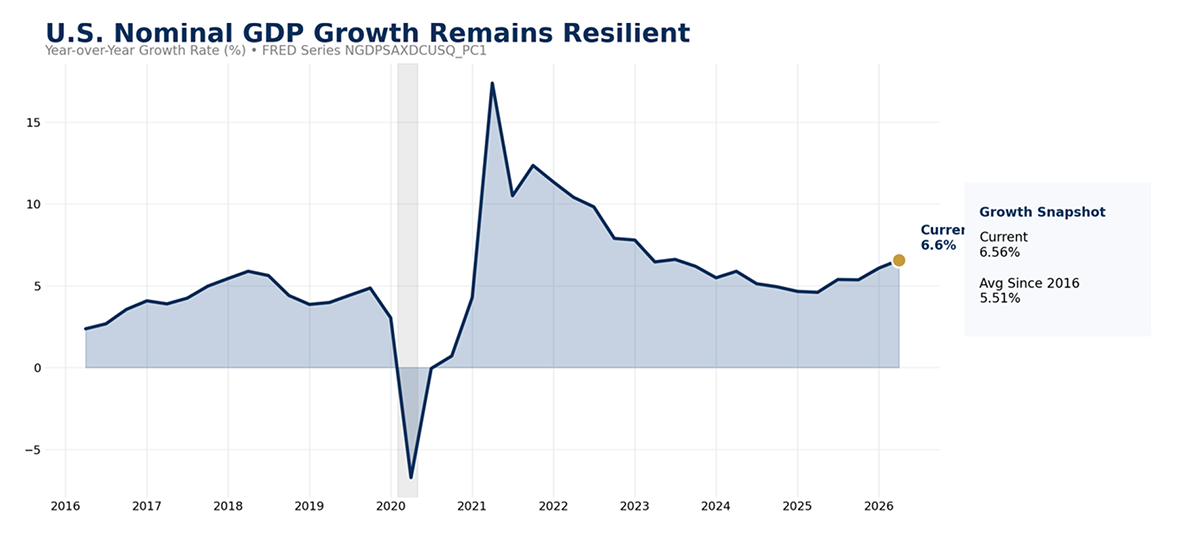
But the decision to run deficits in an expansion, and “run the economy hot,” has a cost, and this is where the “bond vigilantes” enter the picture.

Batman may be the most famous fictional vigilante, but over the years the bond market has had its own unofficial enforcement arm. So-called “bond vigilantes” are investors who protest against inflationary policies by selling bonds (or refusing to buy them at market prices), thus increasing yields. In 1994, as the newly-elected Clinton Administration grappled with the budget deficit, the Alan Greenspan-led Federal Reserve hiked short-term interest rates from 3% to 6%. At the same time, US 10-year bond yields rose from 5.2% to just over 8%, fueled by concerns about Federal spending, in what informally became known as “the Great Bond Massacre.” James Carville, then a political adviser to President Clinton, blamed “the bond vigilantes” for this dramatic increase in interest rates. (Epilogue: in part as a result of this episode, Clinton, together with Treasury Chair Bob Rubin and House Speaker Newt Gingrich [himself elected as part of a wave of Republicans focused on fiscal responsibility, among other things], would go on to the balance the budget by the end of the decade, such that the US actually ran a surplus and stopped issuing 30-year bonds for a time.)

As astute readers will recall, we’ve discussed this topic almost verbatim before, back in 3Q23 when 10-year Treasury yields rose from 3.8% to nearly 5% in the span of a couple months. Literally the week we published that note, Treasury Secretary Yellen chose to drastically cut bond issuance, funding the Federal government largely through short-term bills. Current Treasury Secretary Bessent opposed the policy at the time, labeling it “activist Treasury intervention.”
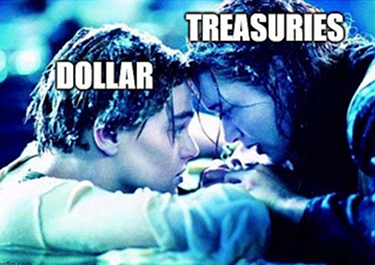
Ironically, not only has Bessent continued that bill-heavy issuance policy, but has proven quite interventionist as Treasury Secretary in other ways. In late July, the US Treasury intervened in the Japanese yen to “support American exports and stabilize Asian markets.” Subsequently, Bessent declared himself “The House” (as in, “the house always wins), daring markets to oppose him. In September (and again on October 1), Treasury bought back a larger-than-previously-expected amount of bonds in efforts to suppress interest rates. Markets were unimpressed, as the 10-year Treasury yield rose from 4.83% on the day Bessent stated “I am The House now” to 5.30% at quarter-end. Perhaps the house does not always win.
Fundamentals usually trump interventions (eventually) and the fundamentals here are not in Secretary Bessent’s favor. Interest rates, as we have talked about for at least three years, remain “higher for longer” because of three fundamental drivers.
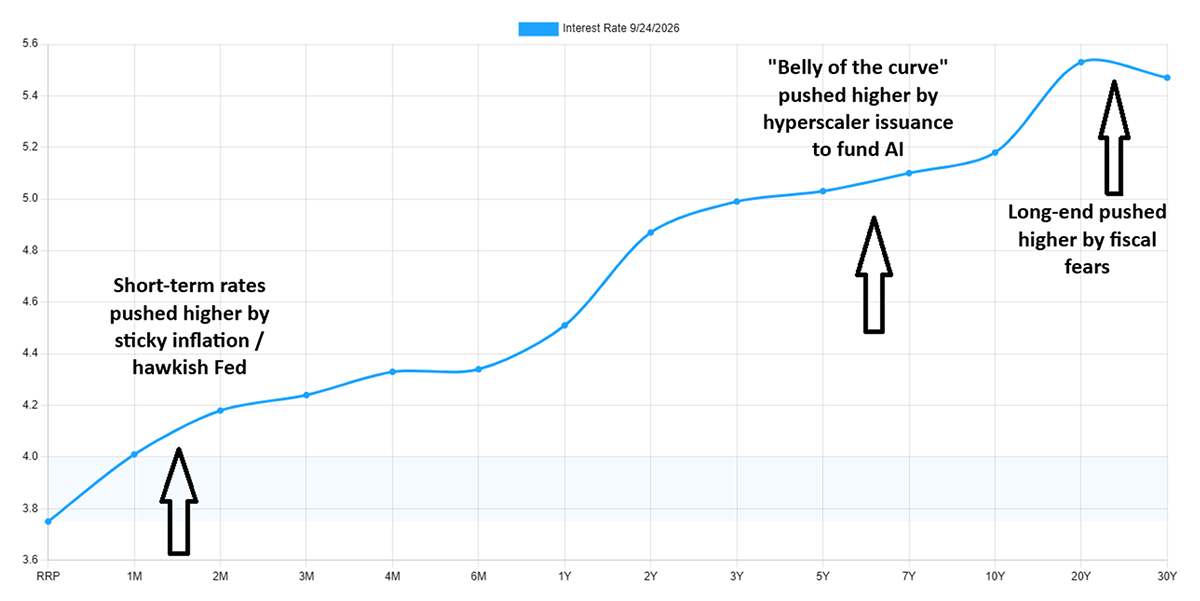
Short-term rates are high because persistent inflation above their target has forced the Fed to be hawkish. As a result, the market has moved from expecting multiple rate cuts in 2026 to expecting multiple hikes over the next 6 months. The 5-10 year portion of the yield curve has been pressured by record corporate bond issuance to finance AI-related investment. And the longest-dated bonds (10 years and beyond) are the territory of the bond vigilantes, refusing to buy Bessent’s bonds unless they are paid a higher yield.
So, where do we go from here? Well, nominal GDP growth is running north of 6%, so that is our best guess as to where 10-year yields will go. Does this mean “The House” is powerless to lower rates? Hardly. There are plenty of more extreme intervention levers the Treasury can pull, notably the Treasury General Account (TGA), which is approaching $1 trillion. A drawdown of this balance would inject reserves into the banking system and could temporarily suppress yields, creating conditions for a major bear market rally in bonds. The technical/positioning risk at present is not insignificant, given the speed of September’s sell-off, which saw the 10-year Treasury yield surge 52 basis points (from 4.77% to 5.29%) in under four weeks.
To date, the bond market has been unimpressed by the $4B and $6B bond buybacks done in September and October. Secretary Bessent could take a page from the Yellen playbook, and go her one further, cutting or eliminating long-term bond auctions altogether when those auction schedules are announced in early November. Such yield curve control might “save” the bond market, but would come at a major cost, in that it would substantially weaken the US dollar.
On the monetary policy side, we wrote last quarter that we expect modest Fed tightening through year-end, and we still expect that. Will rising rates and credit spreads imperil the AI build-out? We don’t think so. Earnings reports from the major tech companies have highlighted the favorable returns on their AI investments, and we think the forthcoming Anthropic IPO will underscore this point. Tech stocks could sell off at any time for any reason, but we do not think the cost of capital is a major issue for the hyperscalers (yet). As such, we would view any major correction as a buying opportunity.
Will rising rates hit consumer spending? Again, we don’t think so. Due to the “K-shaped” nature of the US economy, where the wealthiest 10% of households account for over 50% of spending, higher rates are trumped by the wealth effect of higher stock prices. Paradoxically, higher short-term interest rates will lead to greater investment income for the wealthy consumers that hold the most money market balances, and could potentially boost spending further.
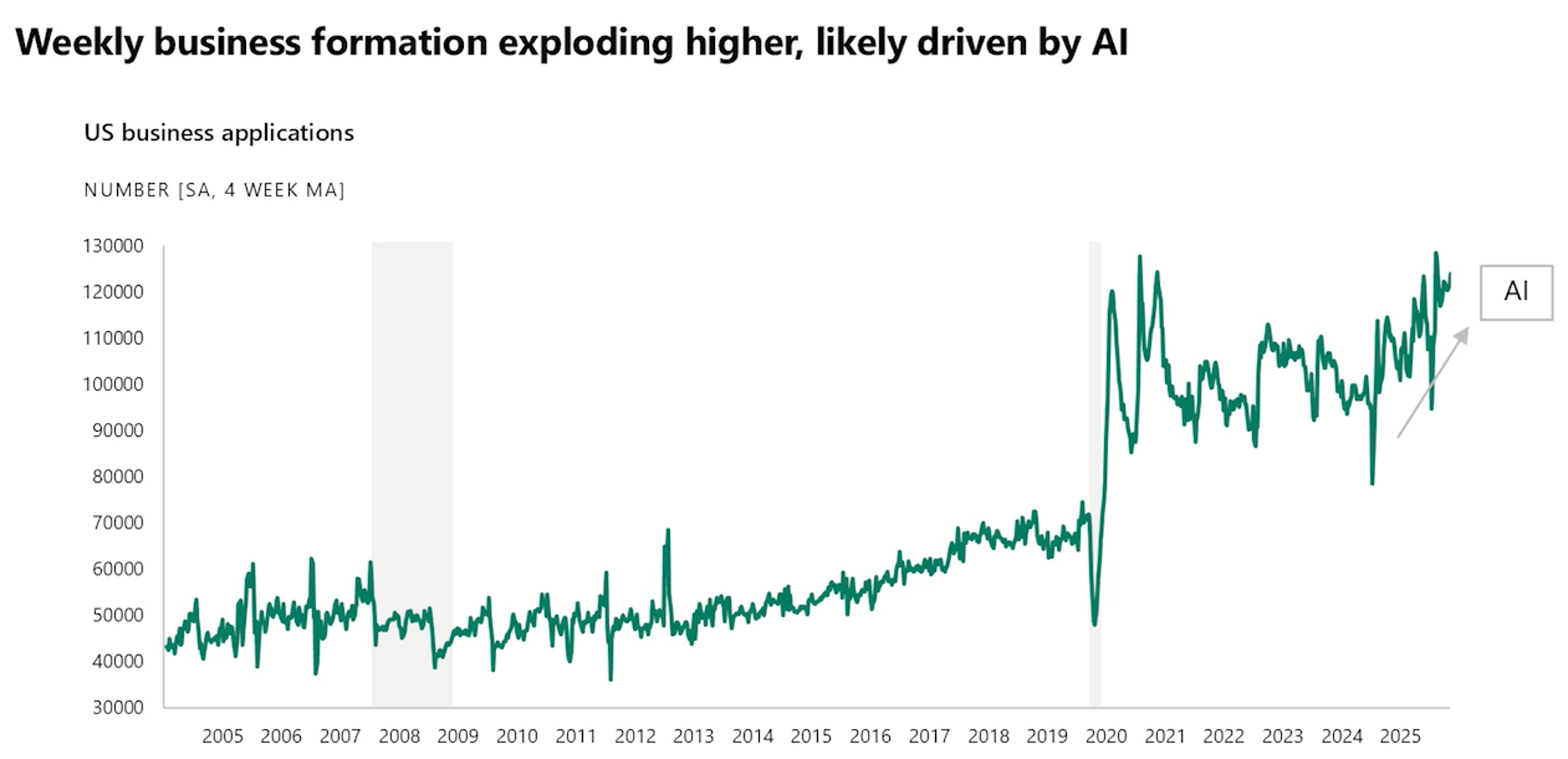
And what of the “Citrini” fears, which we highlighted earlier this year, that AI will lead to widespread unemployment? Again, we are sanguine on this prospect in the medium-term. We have actually seen business formation rise to all-time highs, at the same time that unemployment rates are falling for workers in their 20s. Could this mean an AI-enabled boom in entrepreneurship is underfoot? Business formation typically leads to increased hiring. Could AI adoption actually lead to job gains? Time will tell.
Looking at all these factors: hot growth, sticky (but not out-of-control) inflation, demand for compute outrunning supply, and a Fed hiking into economic strength, our primary economic scenario base cases fall into the “constructive” category. An overheating economy such as the one we outlined in our 2026 Outlook remains our primary base case. We also see a potential outcome where AI begins to deliver productivity growth and inflation cools. That said, a 2022-style “inflation burn” remains a potential adverse tail risk, and one we need to work to insulate portfolios from. We will cover the investment implications of these three scenarios in the next section of this report.
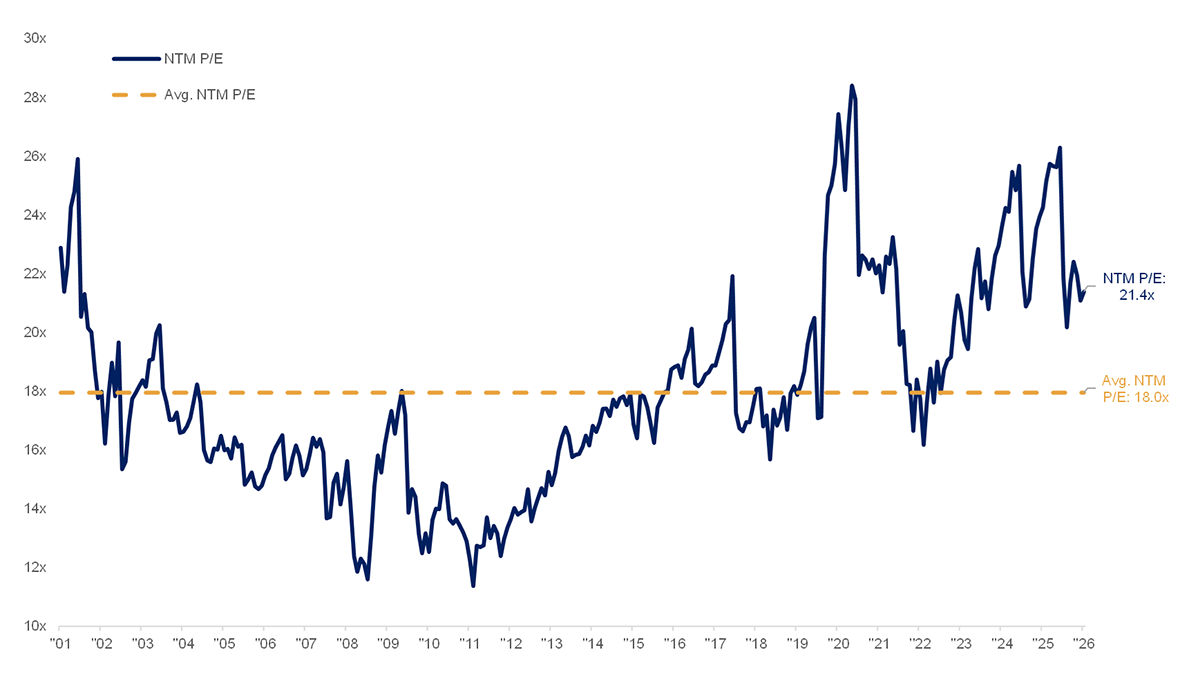
While we continue to hear AI referred to as a “bubble” there is no obvious bubble in stock market valuations, which have actually fallen in past six months.
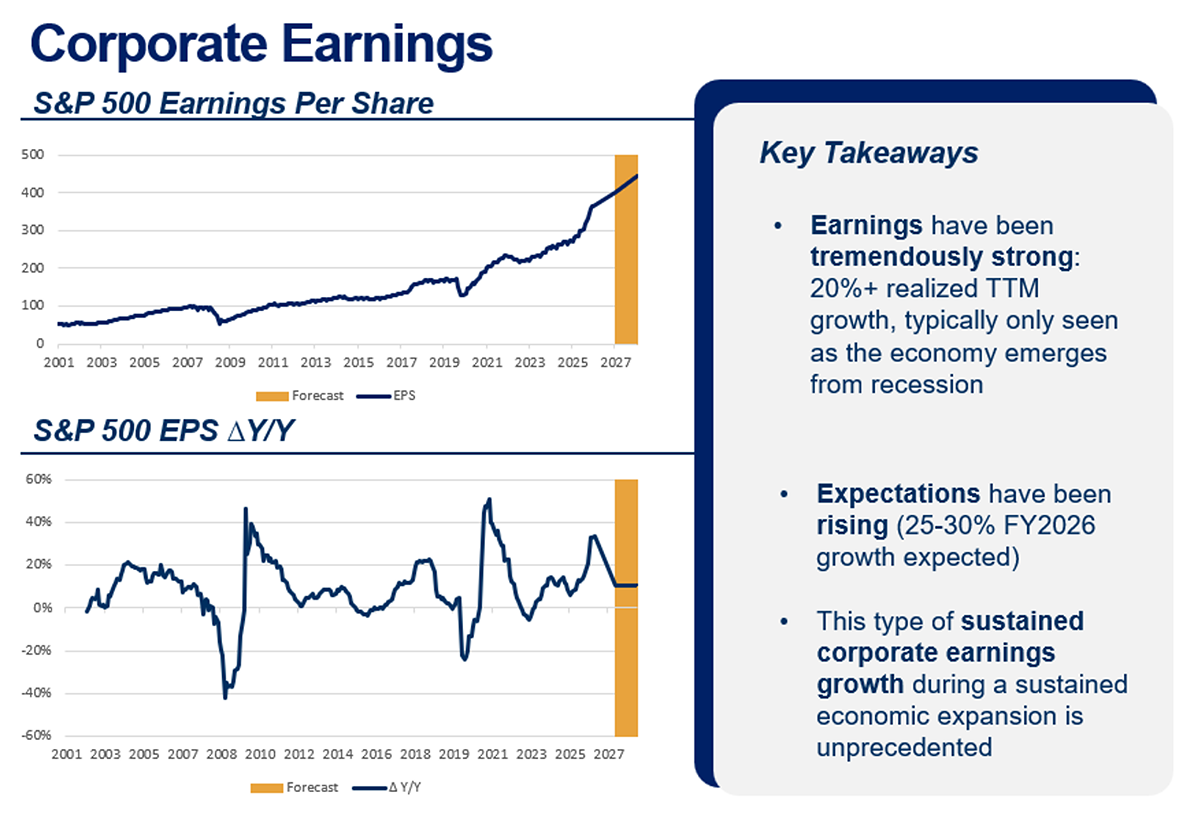
Where the risk lies is in earnings expectations that may prove unrealistic. Stocks aren’t expensive if we assume the market consensus is correct that S&P 500 earnings will realize 30% growth for FY2026 and mid-teens growth in 2027. But these expectations set a high bar for next year, and the corporate sector cannot grow at 15% indefinitely unless we see even “hotter” nominal growth in the broader economy, widespread productivity gains, or large increases in consumer and/or government debt.
Investment Implications
Unsurprisingly, given our previous comments on bonds, we maintain a decidedly short duration bias in portfolios. With the yield curve still quite flat (10-year Treasuries yield just 0.4% more than 2-year Treasuries as of this writing), investors don’t have to reach for duration to lock in attractive yields.
Within equities, it’s important to maintain balance. In the “overheat” scenario described above, “value” and cyclical stocks would outperform the tech market leaders of the past few years. So, it’s important to have broad exposure, and we have been adding to beaten-down companies in healthcare, financials, consumer staples, and even tech. But we think it’s also critical to stay exposed to “the AI trade” in some form. In the “AI delivers” scenario described above, we will continue to see narrow leadership, and mission-critical companies like Nvidia are far from expensive. Moreover, AI remains the megatrend of this decade. There will be ramps and drops along the way, but we suspect investors who avoid the high-growth, high-profitability companies with enormous total addressable markets that inhabit this space will be disappointed over the next few years (as they have been the past few years).
But the potential for a hot economy to morph into a stagflationary one, as we saw in 2022, while low, is certainly not zero. For this and other reasons (AI and infrastructure require a lot of raw materials) we think it makes sense to maintain exposure to commodities and/or commodity-producing companies.
Where appropriate, liquid alternatives (which have gained appx 20% YTD) remain a great portfolio diversifier in a world where bonds do not necessarily hedge stock portfolios. Bonds should be owned where investors seek to generate attractive all-in yields, not to serve as portfolio protection.
As always: diversification and dry powder in the form of short-term bonds, cash, and other stable value assets will allow investors to take advantage if/when weakness in bonds spills into equities and other risk assets like commodities and credit. Given that we think bond market positioning may still be offsides, and rates have further room to move higher, this is important. You can’t buy the dip when assets trade to favorable valuations if you are fully invested in a concentrated portfolio.
We hope you are enjoying the Fall weather and the return of football season. Please reach out to me or your Stock Yards Bank Team if we can be of assistance or you have any questions.
We provide the information in this newsletter for general guidance only. It does not constitute the provision of legal advice, tax advice, accounting services, investment advice, or professional consulting of any kind. The information provided herein should not be used as a substitute for consultation with professional tax, accounting, investment, legal, or other competent advisers. Before making any decision or taking any action, you should consult a professional adviser who has been provided with all pertinent facts relevant to your particular situation. The information is provided “as is,” with no assurance or guarantee of completeness, accuracy, or timeliness of the information, and without warranty of any kind, expressed or implied, including but not limited to warranties of performance, merchantability, and fitness for a particular purpose.